
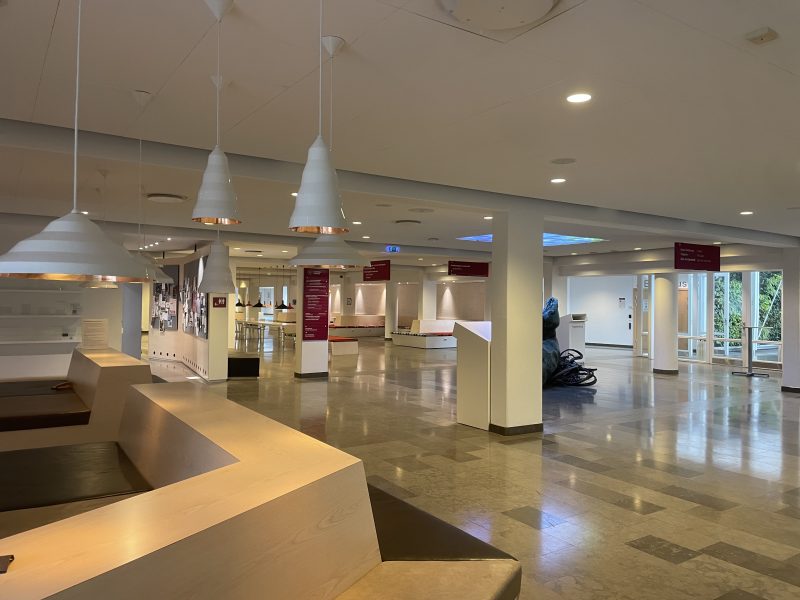
What makes the BSc in Biomedicine special? From a first-year student’s perspective
When I talk to my friends studying different programmes back in Spain, I realise that there are many differences between our university experiences. Many of those details I could not have imagined before starting my journey at KI.
This Bachelor’s in Biomedicine is special in many ways: the only undergraduate programme in English at Karolinska Institutet, an international approach, a clear focus on research… But that’s not all!
In this post I will share with you some other less expected factors that make the BSc in Biomedicine at KI so special.
1. Multiple teaching methods
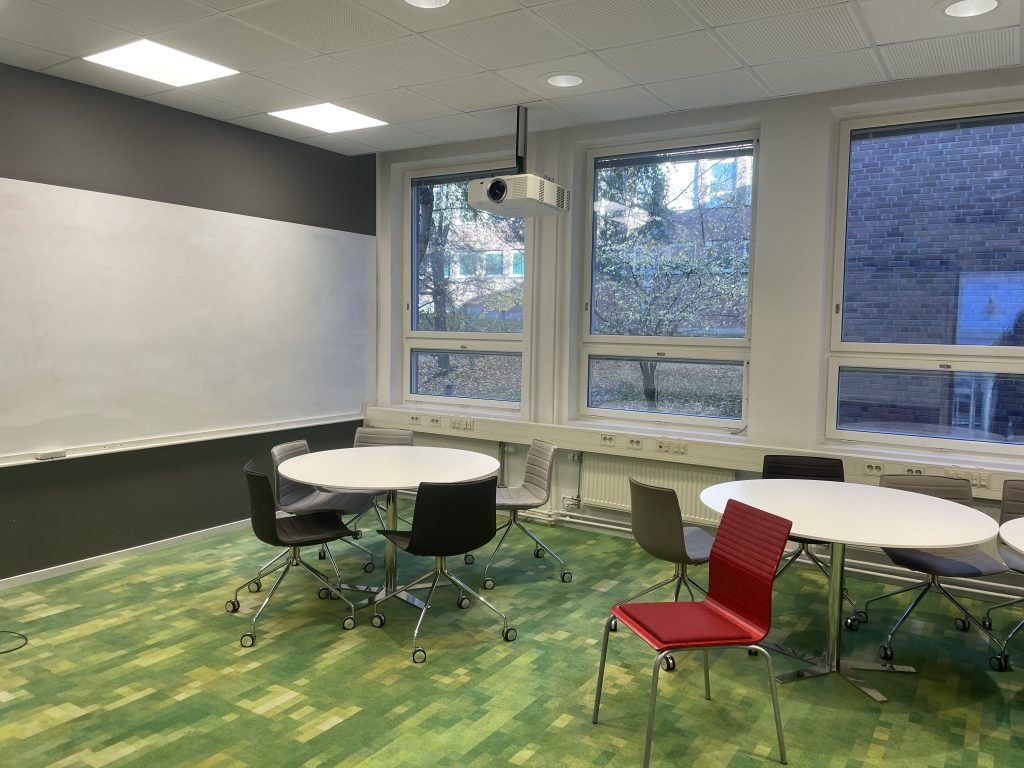
The Bachelor’s in Biomedicine is a programme carefully tailored to provide students with both the theory and the practical abilities that they will need in their future careers. We constantly practise skills such as critical thinking, oral presentation and teamwork.
That is why the schedule features many different teaching formats, ranging from group projects to lectures, from laboratory sessions to seminars. Every week looks different! The variety makes the courses dynamic and enables students to fully grasp the concepts.
Some of the teaching methods that I have experienced so far:
- Lectures: a teacher explains a topic or concept in detail, with short breaks and sometimes practice problems in between.
- Laboratory sessions: students prepare, perform and analyse the results of an experiment related to a topic they learnt that week. We often work independently, supported by lab assistants.
- Seminars: in smaller rooms with a teacher, a group of students (15 to 20 people) goes through a set of problems related to a topic they learnt recently.
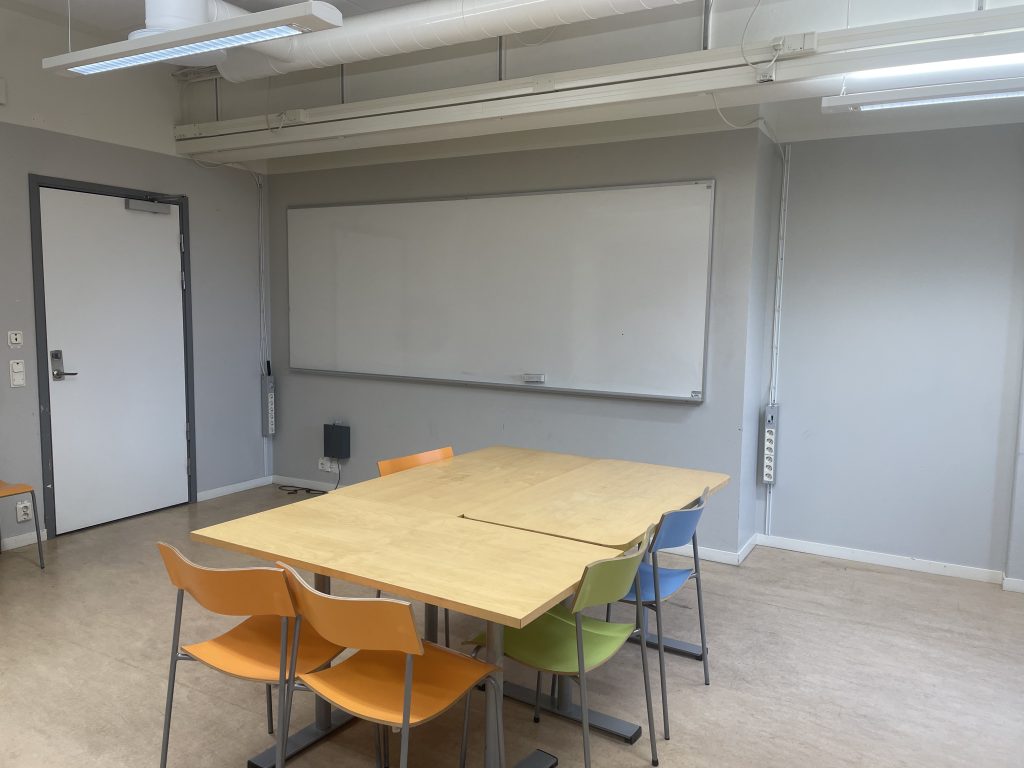
- Group work: in even smaller groups (7 to 10 people) students go through a set of problems without the assistance of a teacher, finding the solutions through dialogue and discussion. Here we can sit with whoever we want and we do not have to submit anything. On the other hand, in group projects we don’t choose our partners and we do often get graded with an oral presentation or written report.
And these are only a few! Self-study sessions, group projects, workshops… Every course leans more on some than others, but at least three teaching methods are used every week.
As the KI website describes it, learning is student-centred.
2. Flat hierarchy and student feedback that is heard
Sweden is known for being a country with a very flat hierarchy. What does that mean within the university context? Teachers are addressed by their first names, not their surnames, and no “Dr” or “Mr” is used. We are expected to treat each other as equals, always with respect but without fear.
This is a huge shock for some people from other countries, who feel that they are disrespecting their teachers by using their first name. Nothing could be further from the truth! Most of them would be surprised if you talked to them in an excessively formal register. My Spanish secondary school was quite similar, so I had no problem understanding this hierarchy, but it takes time for people coming from other countries to get used to it.
A not-so-expected benefit that comes with this flat hierarchy is the trust that students receive and the importance put in their personal experience. For example, after every course or university event, students receive an anonymous survey to give feedback and share their thoughts. And that information does not sit there in a computer programme getting (metaphorically) dusty. Shortly after the survey closes, students often receive the results and statistics of the collected feedback. When teachers present the courses, they explain what has been implemented or changed based on last year’s comments. This surprised me at first, seeing how older students’ opinions have shaped my courses today, and realising that my perspective could help future students. I believe that feeling heard makes everyone feel a lot more connected to what they do and it is one of the main reasons why I feel so comfortable at Karolinska!
3. A grading system that encourages collaboration, not competition
Did you know that KI does not have a class ranking? Having one is common in many universities around the world, but not in Sweden.
For some assignments in the BSc in Biomedicine we do not even receive a numeric grade, only a notification on Canvas (the learning platform) informing us whether we passed or failed. For exams and some more complex tasks such as group projects or lab reports there are three possibilities: Fail (U), Pass (G) and Pass with distinction (VG). We do often get a numeric grade for those, but ultimately what counts is which of the three options you get. For example, VG might be above 80% and G above 50%.
I believe that this grading system encourages students to focus on their personal progress and goals. Coming from a heavily grade-centred country like Spain (even though we did not have class rankings), KI’s way of doing it felt like a relief to me. Numbers and decimals stop carrying so much meaning and in my opinion this makes studying much more enjoyable. Collaboration and teamwork, which are already encouraged through different teaching styles, are also enhanced by this system. And at the end of the day, no one works alone in a research lab!
4. A semester structure without the rush of exam-week
Yep, you read it correctly. At KI we do not have “exam-weeks” where we sit tests on multiple courses. Instead, we take one subject at a time, study it in depth, and then take an exam before moving on to the next one.
For example, the first semester of the BSc in Biomedicine consists of three courses. In September, we completed “Introduction to Biomedical Sciences”, a short course that explored basic anatomy and biochemistry. From October to mid-November, we are studying “General and Organic Chemistry”. I will sit the exam for this subject soon! After that and until the end of the semester in January, we will study “Cell-, Stem Cell and Developmental Biology”.
I believe that this distribution allows students to fully focus on the subject at hand. Also, it makes more complex assignments possible, since all time is dedicated to that area of knowledge. And compared with my experience of Spanish secondary school, stress levels became much more manageable for me.
However, something worth bearing in mind is that since all days are dedicated to one specific course the content moves faster. The system encourages you to keep up with your studies insted of cramming the night before.
5. Many opportunities and doors open for the future
Last but not least, the Bachelor’s in Biomedicine gives a broad perspective on the field, which most students complete later with a Master’s. There are no elective courses throughout the programme, since it prepares students to be able to choose whichever specialisation they want to focus on afterwards.
Studying this programme at Karolinska Institutet opens many many doors to learn about what you are interested in before making a more binding choice. Even outside the Bachelor’s, there are student-organised events, career fairs, workshops and more that will show you paths you had not considered for yourself before. Having access to this institution and its research is also one of the main reasons why I chose to study here. Older students say that getting an internship (or more than one) in a research laboratory during your Bachelor’s programme is not rare. KI has a lot to offer!
I hope that after reading this post you have a better idea of what it is like to study the Bachelor’s in Biomedicine at Karolinska Institutet! Do not hesitate to write me an email if you have any questions regarding student life.

Carla
Hola! My name is Carla and I am a first year student of the BSc in Biomedicine. I come from Spain and I often get asked why I moved to Stockholm on my own at 18. My answer is that KI happened to be here! The prestigious programme and the research focus caught my attention from the beginning. Now I have two goals. The first one is to squeeze the most out of this experience, saying yes to new opportunities and growing as a scientist. The second one is to share all of it with you!
0 comments