
A look into Global Health’s FAQs—Part 1
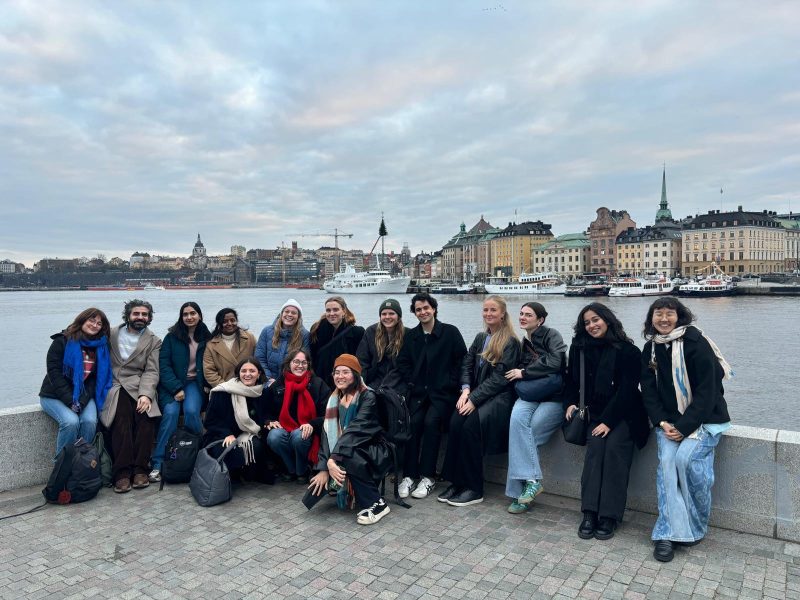
The time has come for me to finally unveil the list of questions I’ve been asked the most when it comes to the Master in Global Health. It’s been a while since I had this idea, but considering I can finally say I have some experience under my hand, ‘tis officially time. So, forgive the lack of the lovely imagery I usually include in normal posts, but I want to make the questions the actual star of today’s show. Onward!
1. To public health or to global health; that is the question! AKA What’s the main difference between public health and global health, and why choose one over the other?
Chances are, you’ve searched this question already and have come across vague, indirect answers. And who’s to blame? These two disciplines are basically fraternal twins in their nature; one cannot exist without the other. So, I’ll try to answer it myself based on my own experience (so please don’t come for me if ChatGPT/Gemini/Claude or whoever says otherwise).
Public health, at its very core, deals with all things healthcare, ranging from healthcare systems, disease epidemiology and distribution, promotion and prevention approaches, healthcare policy, you name it. At KI, two tracks are offered: Public Health Epidemiology (PHE) and Health Prevention and Promotion (HPP). Very anticlimactically, each focusses exactly on what their title reveals: PH Epi is very biostats oriented, while HPP on community interventions and the like.
Global health, as I like to define when asked by my extended aunts and uncles, is just public health at a global scale. Okay, I know I’m not doing it justice enough, so let’s try again. What I’ve noticed over the course of the programme is that this discipline places a significant emphasis on equity, ethics, justice, and international collaboration among all countries.
Contrary to popular belief, global health doesn’t deal exclusively with low-and-middle-income settings; high-income countries play a major role on research development, resource allocation, and the overall workings of the global health ecosystem. This field is currently undergoing massive changes due to the recent worldwide budget cuts, and the long-awaited effort to give back the power to under-resourced settings so as to foster locally sustainable solutions and avoid dependence on foreign actors.
So, if you enjoy healthcare, plus its place in the international—even diplomatic—context, you can go for this programme. If you admire the work of international NGOs like the Red Cross, MSF, and the partnerships between countries to address health issues worldwide, then this is for you.
On the other hand, if you prefer to focus your view on specific healthcare systems—could be municipal, regional, or national—and particular communities, then one of the public health tracks could suit you better. Of very worthy note: it is possible, and dare I say even quite common, for people from both disciplines to mingle and end up following the exact same career path.
Thus, choose based on what you think you’ll enjoy the most for the duration of your Masters. You can always pivot and make the most of your time while at KI!
2. What’s the course structure like and what kind of examinations do we get?
It is a very mixed educational approach, I’d say. It is heavily reliant on group work (every course will have a major component) and the development of useful, transferable skills that would otherwise be unattainable through exclusively written examinations. We do have some exams, of course, but thus far the Master has emphasized oral communication, teamwork, and project management quite heavily throughout.
The work is also quite independent in nature. Professors are indeed readily available to help however they can, but students are usually responsible for finding a suitable topic and approach to solve the assignment at hand.
3. Excuse me, what’s “Applied Global Health Project”? – AKA what is the internship course like? What are the alternatives?
If you’ve looked at the Global Health programme outline, then you’ve probably noticed that, for the third semester, there are two possible options: taking the 15 credit “Applied Global Health Project”, or two other courses. The former is an allocated course to undertake an internship, while the latter two different theoretical courses.
What this means: if you choose this option and are able to secure an internship placement, then you can fully devote this period to it. Otherwise, you’ll take the two additional courses dealing with Evidence Synthesis (think systematic reviews and the like) and Emergency Preparedness. For my class, about two thirds will complete an internship (at organizations like MSF and ReAct, research groups at KI and other universities, government agencies, and even embassies).
You’re responsible for finding your own internship, which is a nice way of practicing your “real world skills” of setting up your own thing, getting out of your comfort zone by reaching out to many people, and just trying the best you can to pursue your goals.
I’ll be doing an internship at Uppsala University with the pharmacoepidemiology research group, and am super excited for it (upcoming blog on this).
4. “Should I stay or should I go” Thesis Edition- AKA is it possible to complete the thesis abroad, and how?
The simple answer is yes, it is possible and quite common. The Global Health programme has two established partner universities (Makerere University in Uganda and Escuela de Salud Pública in Chile) that participate in a bilateral exchange agreement.
However, this is far from the actual scope. You are free to arrange your own placement anywhere you’d like, provided that you’re able to secure a project relevant to the programme and a co-supervisor at KI that will aid your main supervisor at your host university/organisation. Much like for the internship, you’re 100% responsible for all of this.
If you choose to stay at KI, there will be official fairs and meetings aimed at promoting the wide variety of projects that research groups are able to offer at the time, so fret not; there is always something for everyone.
I myself will head to Utrecht University to complete my thesis at the Centre for Pharmaceutical Policy and Regulation and received an Erasmus+ Grant to support myself financially, which is always a huge help. If you stay within the EU, you can also apply for it!
I will write a blog exploring all of this soon as well, so stay put for that.
In short
Alright, that’s it for now. I think I went nuts on some of the answers so I have decided to split this into two (hence the “Part 1” title) and will soon put out the next one.
Now, I was meaning to completely leave the recently arrived winter darkness and the increasing cold out of this, but I’m only human! Okay, just kidding. This year I’ve actually managed to romanticise the darkness by dressing up nice and winter-y, going on lots of walks close to the water and overlooking the lit-up buildings, and lots of hot chocolate (when I say lots, I mean lots). Please check out my fellow blogger Ayu’s new guide on how to go about this winter gently. As they say, slow and gentle does it! Okay, I’ll stop yapping for now. See ya!

Luis - Global Health
Hey! I’m Luis, and I'm currently studying the Master’s in Global Health. I’m from San Luis Potosí, Mexico (no, the city wasn’t named after me) but also grew up in Belgium and Colombia, which sparked my love for international living. After completing my Bachelor’s in Montreal, I felt ready for a new adventure, this time in Sweden! Experiencing diverse healthcare systems inspired my passion for global health, which led me straight to KI. In my free time, I enjoy city strolls and fika—though I only drink milk, not coffee!
0 comments