
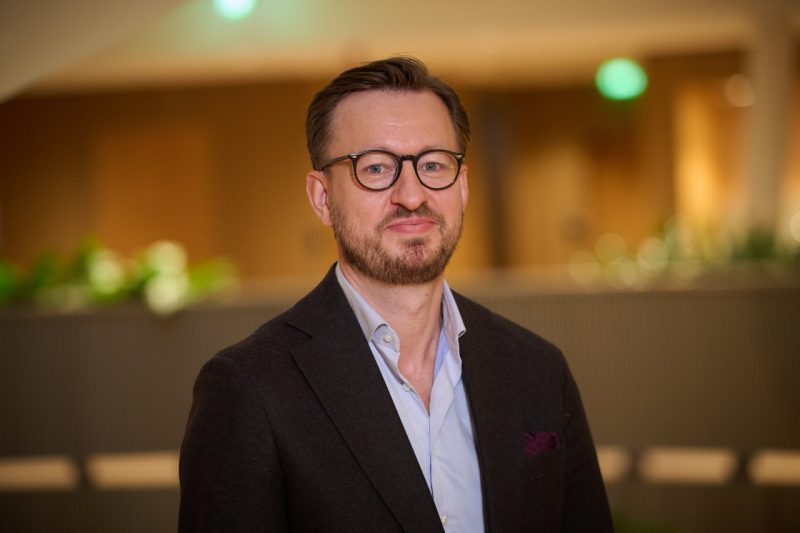
From the horizons part 3: an interview with alumn Ajdin Jakupovic
For the last part of this series I had the honor to interview Ajdin. He graduated from the program in 2020 and has co-founded HOYA, an advanced therapy consultancy company. In this blog you will gain insights from Ajdin’s entrepreneurial journey after the program.
What was your background before starting the program?
Before joining the MBE program, I trained as a pharmacist and later worked across several roles in life sciences — from managerial positions to roles in business development, sales and marketing. I had a broad understanding of drug development and the business side of pharma, but I didn’t yet have a clear direction for how to combine those experiences into something meaningful and long-term.
What motivated you to apply to the program? Did you already have the idea of starting a company?
I applied because I wanted to understand, in a much deeper way, how scientific innovation becomes real products that reach patients. Entrepreneurship had always been on my radar, but I didn’t enter the program with a company idea in mind. What I did have was a strong pull toward the intersection of science, strategy, and commercialization, and the MBE program felt like the ideal environment to develop that.
Having studied pharmacy prior, I was looking for a program that combined rigorous theoretical frameworks with hands-on experience through practical placements. The MBE program offered exactly that blend. It gave me the foundation to explore different avenues across biotech and pharma and, ultimately, the clarity to recognise and act on the opportunity that became HOYA.
What led you to start a company?
It grew out of a clear gap I and my cofounders kept seeing in the advanced therapy space: brilliant research teams were developing therapies with the potential to cure disease, yet few had the commercial, regulatory, or translational support needed to turn that science into something scalable and accessible. That realisation further crystallised to me during my time in venture capital, in countless conversations with my colleagues. We repeatedly met founders with exceptional science but without the guidance required to navigate clinical and commercial inflection points. Founding HOYA became the natural next step, a way to bridge academia and industry, help innovators avoid predictable pitfalls, and accelerate their path from early research to broad patient access.
What are the most challenging aspects of being an entrepreneur?
Two things stand out:
- Prioritisation. Deciding where to invest your time and energy when everything feels important.
- Balancing confidence with uncertainty. You often have to make decisions before you have all the data, and get comfortable moving forward anyway.
And of course, there’s the reality that you carry the responsibility for the entire business — the wins, the setbacks, the team, and the long-term direction. It’s exciting, but it can be heavy at times.
What skills or knowledge from the program did you find valuable when becoming an entrepreneur?
A few things were directly transformative:
- Understanding the full innovation journey — the program forces you to think beyond the science: reimbursement, regulatory strategy, IP, financing, and market dynamics.
- Working across disciplines — collaborating with engineers, scientists, business experts and clinicians mirrors how biotech and ecosystems actually work.
- Structured problem-solving and communication — essential when advising clients and pitching a vision.
Most importantly, the program helped me develop a mindset of translational thinking — always asking how an idea becomes something usable, fundable, and adoptable.
A piece of advice for someone considering starting their own company?
Start small, start early, and start talking to people. You don’t need a perfect plan — you need momentum, feedback, and a willingness to iterate. Surround yourself with people who elevate your thinking, and build something that genuinely solves a problem you care about. If you follow the signal, the rest follows.
And perhaps most importantly, allow it to take time. In a world obsessed with quick wins, shortcuts, and overnight success stories, building something meaningful, something that will still matter in ten or twenty years, requires patience. The early stages often feel slow, but that’s where you lay the foundations that actually last.

Wendy - Bioentrepreneurship
Hej everyone, I'm Wendy from Finland! I'm currently studying in the Bioentrepreneurship master's program (MBE) at Karolinska Institutet. I was drawn to this program because of my interest in the business aspects of life sciences and the unique intersection between science and entrepreneurship. I'm excited to share my journey as an MBE student at KI with you! When I'm not studying, you can find me at the gym, baking, enjoying fika with friends or crocheting. I am also looking forward to exploring the beautiful city of Stockholm – especially discovering and trying out different brunch spots and cafés.
0 comments