
FAQs on the bachelor’s programme in biomedicine (part 1)
Not sure what to expect from the bachelor’s in biomedicine? In this blog, I will address the frequently asked questions I recieve from prospective students. This should give you a better insight on what the program is like. I’ll give you answers to the first 5 following questions:
1. How much lab work is there?
2. What is your schedule like?
3. Do you have breaks for the holidays? Are you able to visit home often?
4. How often do you have exams? Are the exams multiple choice or essay questions?
5. Is it possible to get internships or work on the side?
6. How many points do I need on IB/equivelant to get in?
7. What are the career opportunities with this bachelor’s degree? What’s your plan?
8. Is it hard to meet people outside of the course or from different unis?
9. How did you find housing? What housing options exist?
10. What exchange opportunities are there throughout the programme?
Watch out for part 2 of this blog where I’ll be answering questions 6-10!
1. How much lab work is there?
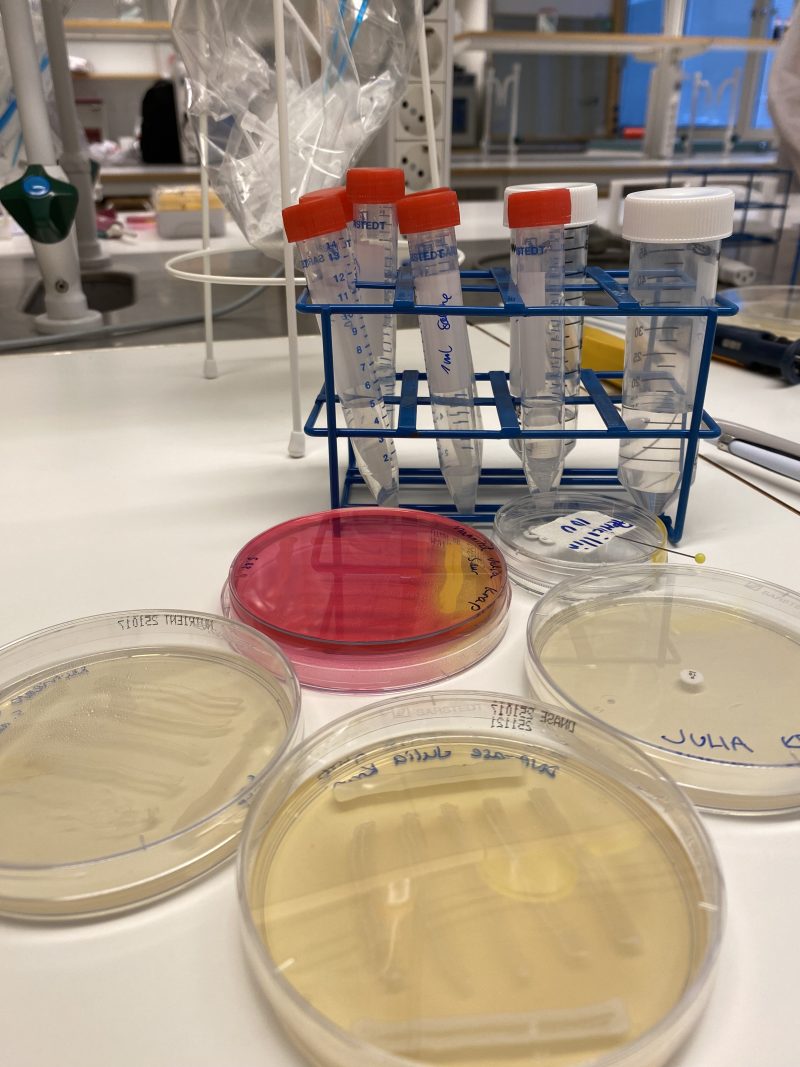
It depends on the course. For a course like organic chemistry, we would have some sort of lab work nearly each week for 6 weeks. Labs can be as long as from 9-16, however we usually finish earlier. The days that we have labs we rarely will have lectures. We also had quite a few labs in biochemistry and immunology. But in shorter courses that lasted 1-2 weeks: tissue biology, pathology, biostatistics, we had no lab work. We actually had an online lab assignment for tissue biology as a replacement of lab work.
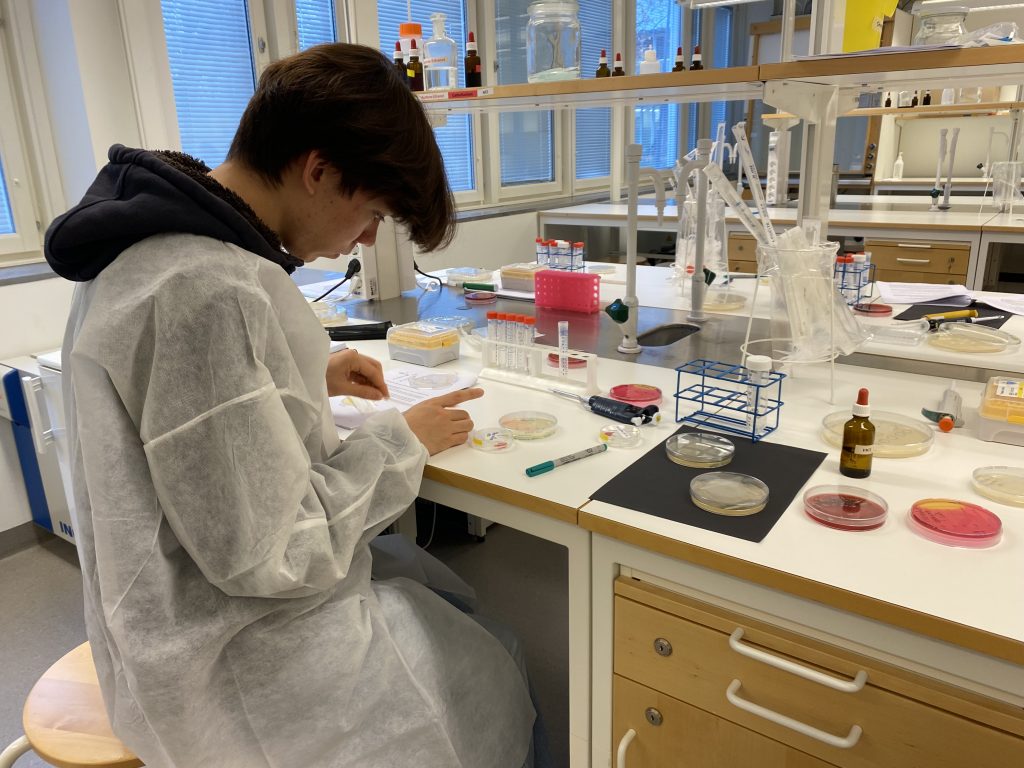
After most labs (especially organic chemsitry) you have to write a lab report. Interestingly, not all labs require this! For example, the labs we had during physiology such as the cardiology lab, the respiration lab, and the ergometry lab were all mandatory but required no written lab report. They were simply meant to be a fun way to see how our knowledge can be applied to measure physiological parameters.
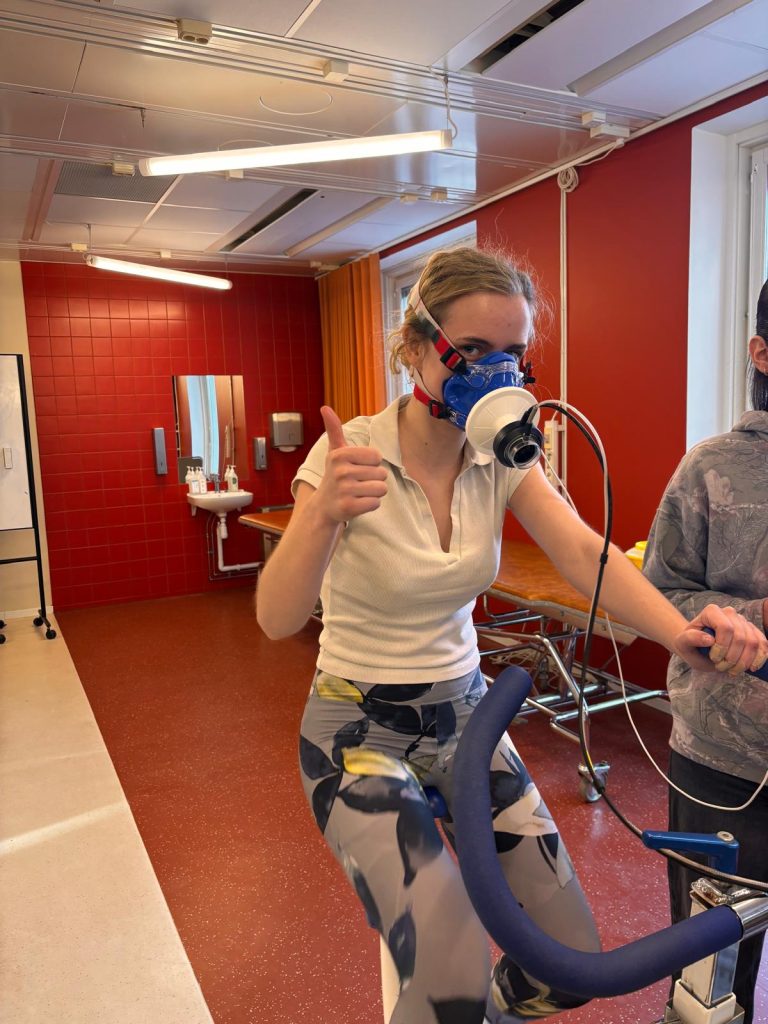
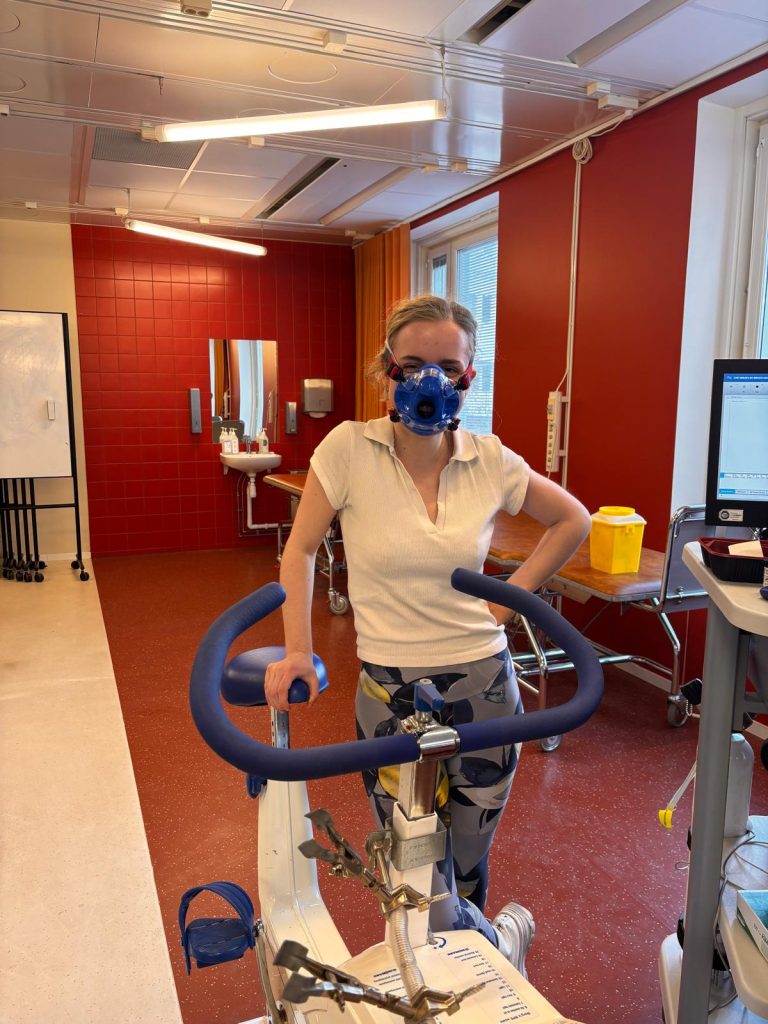
Photos taken before and during our physiology lab where we measured my VO2 max! (Photo credit: Gabriella)
2. What is your schedule like?
Unfortunately, my answer here is again: it depends. This is because the programme is organized in courses, and you study one course at a time. These courses are all led by different course directors meaning every course is not only unique in content but also in the method of teaching.
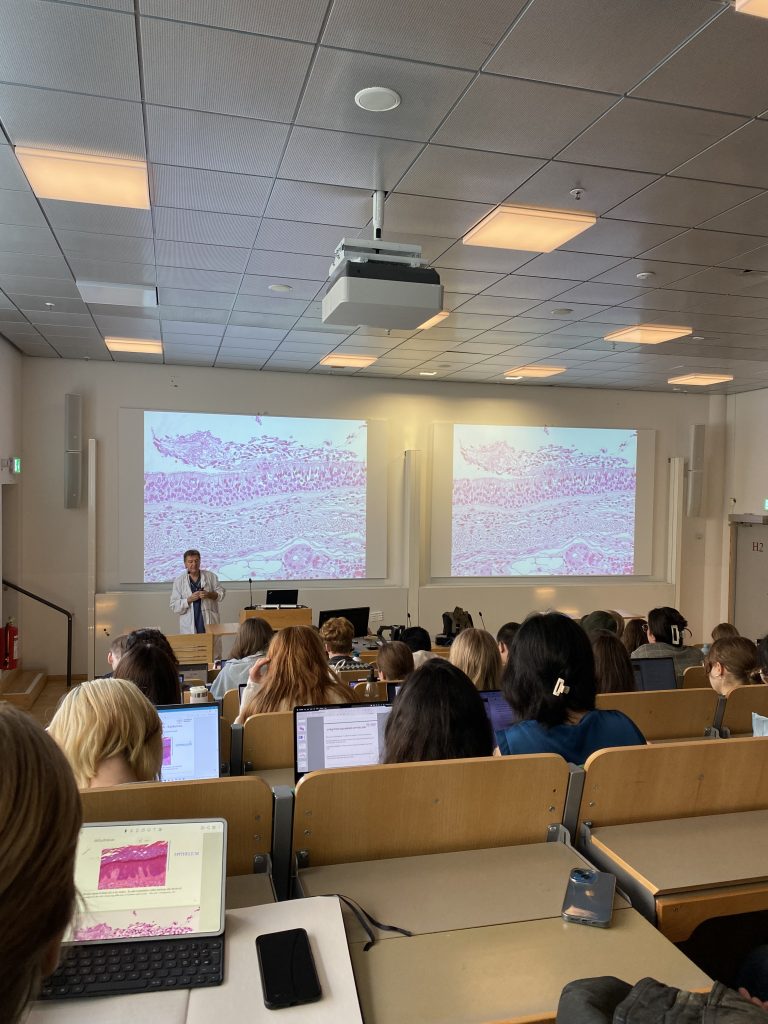
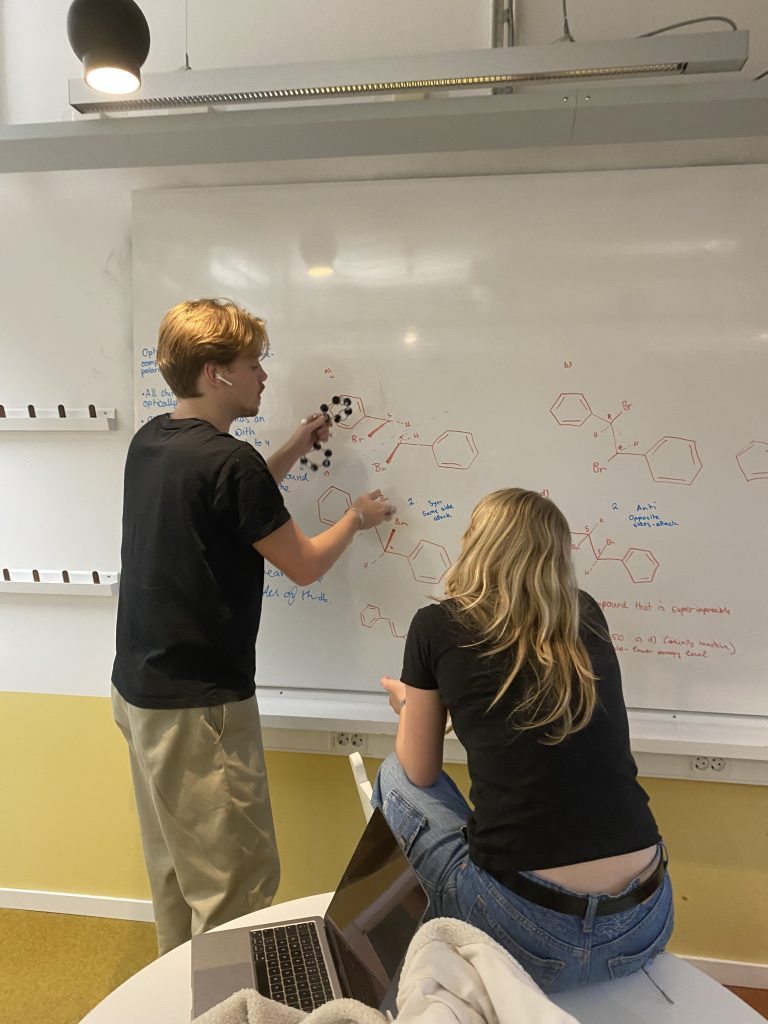
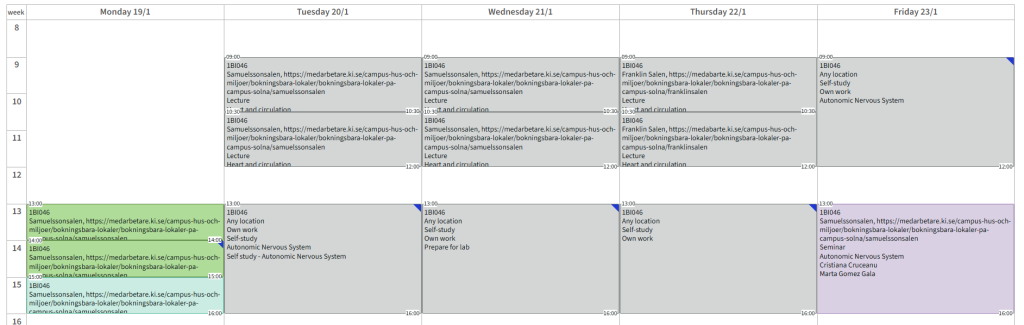
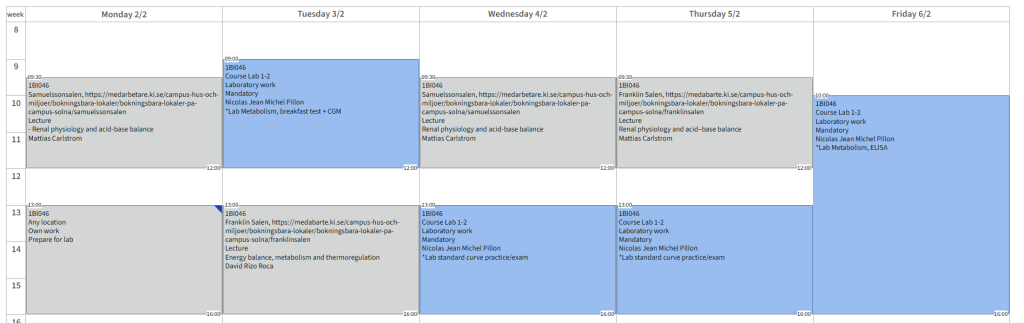
Usually courses have a mixture of lectures, self-study sessions, seminars, labs, and group project work. Most lectures are not mandatory, labs on the other hand are always mandatory. The earliest to have lectures is usually at 9, and we never have any classes or labs past 16. Some days we might even just have one lecture and be finished by 12. The schedule also changes depending on the course. Some courses have more lectures or labs than others.
Here’s an example of what our first 2 weeks in the physiology course looked like:
3. Do you have breaks for the holidays? Are you able to visit home often?
If you google this question and click on the KI website you will find some frightening news:
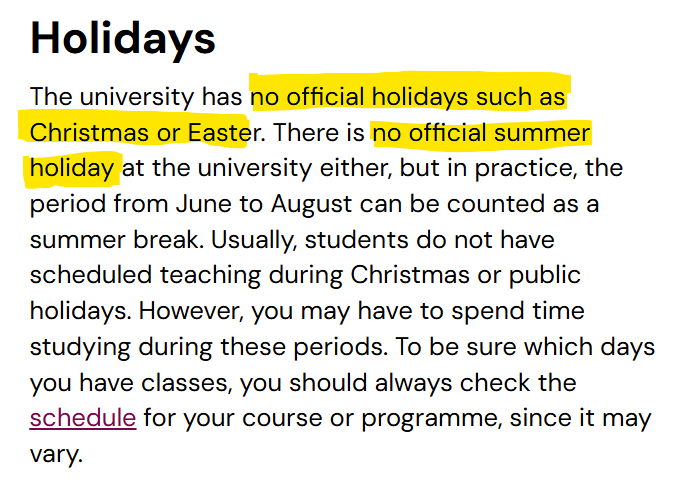
FEAR NOT! We all still have time to go home to family over Christmas and New Years, and I’m in fact writing this blog from Slovenia at the moment since I am home for Easter.
It is still very possible to still visit home and travel for extended weekends while missing some lectures. For example, this year (due to family health reasons), I’ve visited home quite often. I went home for a week in October, for 2.5 weeks in December to January, for a week in March, and now almost 2 weeks in April for Easter. You can technically travel home whenever as long as you’re not missing mandatory classes. And some days are completely off around christmas and easter, so you don’t miss that much!


This Easter I travelled from the 2nd of April till the 15th. I will only be missing 3 days of lectures since one week is off!
4. How often do you have exams? Are the exams multiple choice or essay questions?
We have one exam at the end of every course. So, we never have several courses at the same time, it’s always one course, then a few days off for studying, and then the exam to conclude the course. Sometimes part of the criteria to pass the course is also to have done all the labs and passed the lab reports.
The exams are usually a combination of multiple choice and essay questions. Some exams are fully multiple choice such as the exam for neuroscience. You have plenty of time for them, for a 60 mark exam we had time from 8:15-12:00. There’s really no time pressure, and you can even bring food and snacks to the exam hall! This year we’ve also had all of our exams online using the desktops in the exam hall, while last year we had some exams on paper. Additionally, there’s less pressure about getting good grades since there’s only three grades you can get: pass, fail, or pass with distinction. You can also retake failed exams up to 6 times. However, for certain courses it may be a recuirement to pass a previous course in order to move on to the next.
5. Is it possible to get internships or work on the side?
Yes! Many of my classmates either have an internship or a job at a caffe or bar. It is indeed possible to work on the side, I feel like the course allows for students to have time to be able to work part-time. And if having an internship at one of KI’s labs interests you, then all you have to do is start emailing researchers! I can almost gaurantee that one of those labs will respond.
Heres all you need to know about internship opportunities at KI as a bachelor’s student!
NOTE! If you work 10hrs+ a week, you qualify for Swedish student loans, CSN. You would be getting an additional 5000sek that you don’t have to pay back!
That’s it for this blog, the rest of the questions will be answered in part 2!

Julia - Biomedicine (BSc)
Hi, I’m Julia from Slovenia! I’m excited to share my experience as a KI student. When I first learned about the Bachelor's Programme in Biomedicine at KI, the university’s prestige and its academic and research excellence, I made it my goal to get in. Now that I’m a KI student, my new goal is to make the absolute most of everything KI and Stockholm have to offer — from education to student life. I hope to maintain a “say-yes-to-everything” mindset, learn Swedish as soon as possible, hunt for internships, meet new people, and have fun.
0 comments